
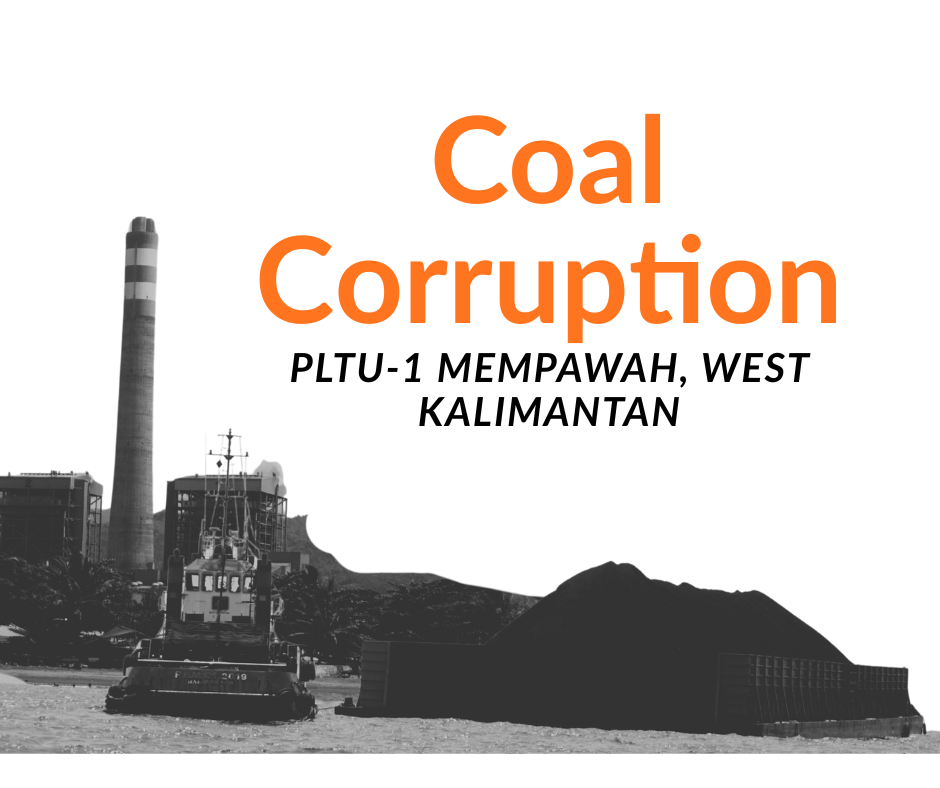
The involvement of Halim Kalla, the president director of PT Bumi Rama Nusantara (BRN), and Fahmi Muchtar, the CEO of state utility PLN from 2008 to 2009, as suspects in the corruption case surrounding the construction of Steam Power Plant (PLTU) 1 in Mempawah, West Kalimantan, adds to the long list of national energy planning issues. The West Kalimantan PLTU-1 project is part of the first phase of the 10,000 MW electricity development program. From its inception, the project drew criticism for poor planning and a lack of transparency in the procurement process.
The project is being built amidst a long-standing electricity oversupply, not only in the Java-Bali region but also in Kalimantan. As of June 2023, Kalimantan’s electricity reserve capacity reached 57%. Even during the period leading up to Eid al-Fitr, Kalimantan still experienced a 38% electricity surplus.
Bhima Yudhistira, the executive director of CELIOS, said the oversupply in Kalimantan is contradictory to electrification ratio in Kalimantan. “It is recorded that no fewer than 1,214 villages in Kalimantan (including East, Central, West, and North Kalimantan) are yet to have electricity. However, instead of evaluating and equitably distributing the excess electricity supply, the government continues to add new coal-fired power plant projects for industrial needs through a take-or-pay scheme that requires PLN to pay for electricity from private generators even if it is not used,” Bhima said.
The situation ultimately results in a significant financial burden for the state and the public. PLN is forced to bear capacity payments worth trillions of rupiah—a mechanism that ensures profits for the corporation, while the public bears the losses through subsidies and potential electricity tariff increases—annually.
Attina Rizqiana, also known as Kiki, a CELIOS researcher, explained that the Mempawah PLTU-1 case demonstrates that coal-fired power plant construction is no longer about affordable energy needs, but rather about calculating political and economic gains. “Communities around the coal-fired power plant are forced to face air pollution, health problems, and loss of livelihoods without access to affordable energy or the promised economic opportunities. Furthermore, oversupply is instead being used as an excuse to delay the integration of renewable energy in Kalimantan, thus prolonging dependence on coal and hindering the realization of just energy transition in Indonesia,” said Kiki.
The Mempawah PLTU-1 corruption case should serve as a critical turning point for reforming national energy policy. Yet under the 2025-2034 Electricity Supply Business Plan (RUPTL), the government still plans to build 6.3 GW of new coal-fired power plants when President Prabowo has committed to achieve 100% renewable energy within the next decade. “We are concerned that the continued push for coal is merely a strategy to channel surplus coal, which is facing declining export demand, into domestic consumption. This approach imposes an immense fiscal burden and benefits only a select few. Without decisive policy shifts, we risk repeating the mistakes of Mempawah PLTU-1, leading to further state losses,” Bhima said.
Besides taking a firm action against corrupt practices and conflicts of interest in the name of energy projects, the government needs to conduct public audits of all ongoing coal-fired power plant projects, stop the development of new coal-fired power plants—including the captive coal-fired power plant—and review the take or pay schemes. Rather than resulting in losses and profits for a handful of parties, public investment should be directed toward community-based renewable energy and equitable energy transition policies.